My readings: Space Opera
I don't have enough time to read all the space opera books I've bought, but when I find a moment, it's Peter F. Hamilton I turn to most often.
Pandora's Star
Pandora's Star is a monumental saga by Peter F. Hamilton. The story takes place in a distant future where humanity has colonized hundreds of planets through wormholes. When a star mysteriously disappears behind an energy shield, an expedition is sent to investigate... with catastrophic consequences.
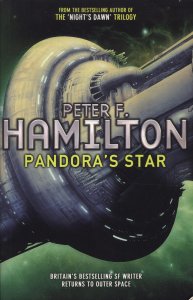
In the French edition, the saga was split into four volumes:
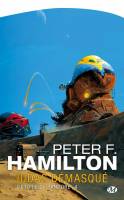
This is grand space opera at its best: a rich universe, dozens of characters, interstellar politics, terrifying aliens and a plot that keeps you on the edge of your seat for thousands of pages. Hamilton excels at building a credible and technically coherent world.
The Void Trilogy
A direct sequel to the Pandora's Star universe, The Void Trilogy takes place 1500 years later. At the center of the galaxy lies the Void, a strange region of space that threatens to expand and devour everything. Inside, a medieval fantasy world contrasts with the ultra-technological civilization outside.
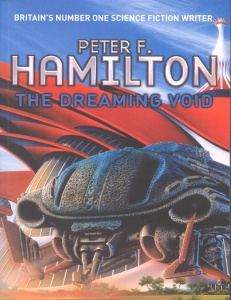
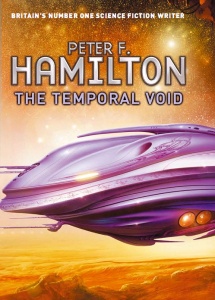
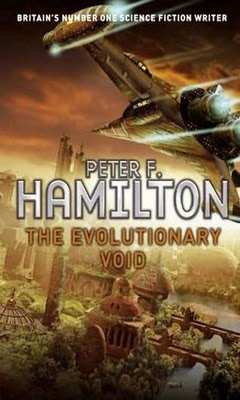
The French editions:
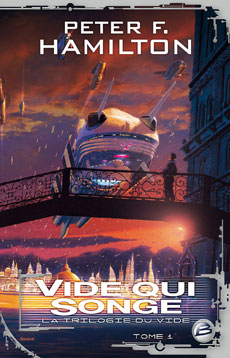
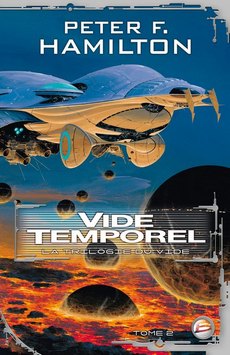
Hamilton skillfully blends hard science fiction and fantasy in this trilogy. Chapters alternate between the real world (with its fascinating technologies) and the world of the Void (with its psychic powers). A masterpiece of the genre.
Why Hamilton?
What I love about Peter F. Hamilton is his ability to build immense and coherent universes, where technology is not just a backdrop but a driver of the plot. As a developer and technology enthusiast, I find his technological extrapolations particularly stimulating.
If you enjoy ambitious science fiction and are not afraid of 1000+ page doorstoppers, go for it.